
On Grief

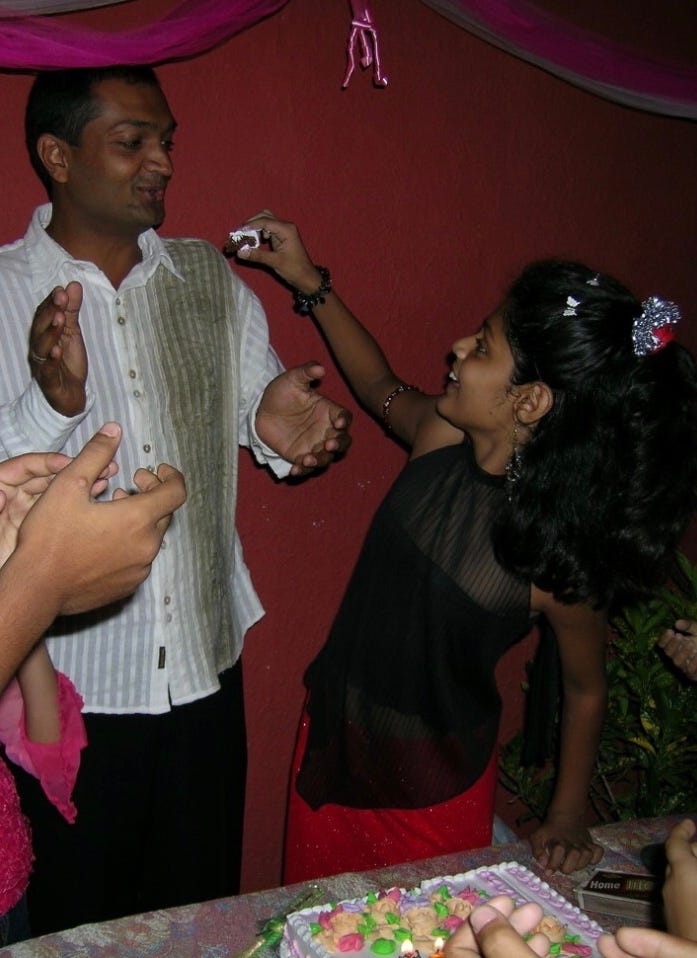
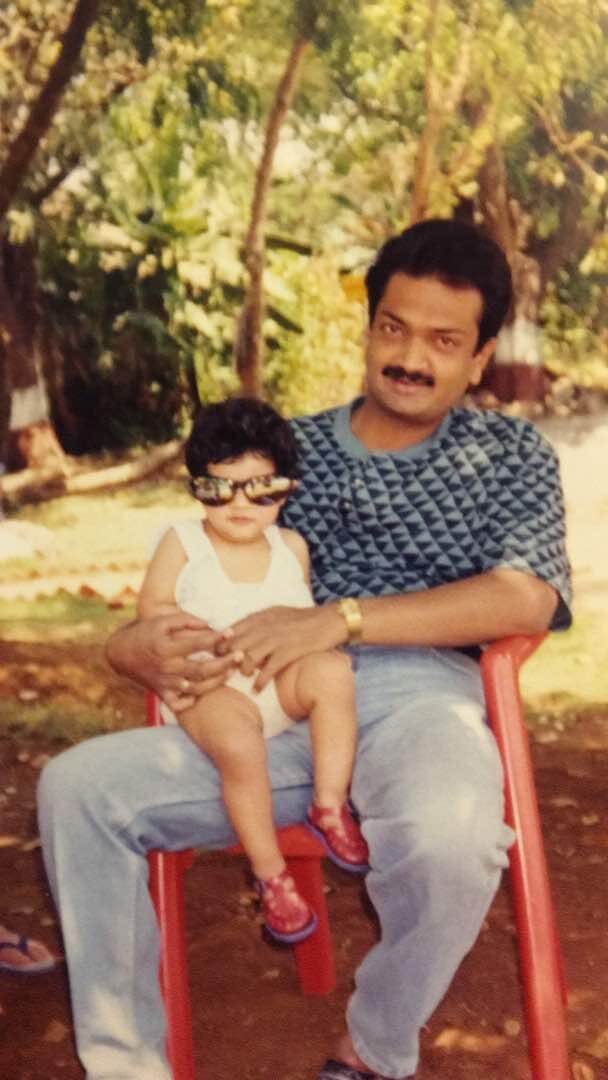
This year marks 15 birthdays without my father.
I spent 15 birthdays with him, and now just as many without him.
Confronting this fact reminded me that no matter how much I try to heal myself, grief never really goes away. Couple that with a milestone event like my wedding, and I get to enjoy all the ways grief shows up in the most unexpected of places.
I have to be honest: I don’t know what grief is, I use it as a catchall term for every sad feeling associated with remembering my father.
This year though, I found myself thinking about my father a lot. In a departure from the fondness I had learned to remember him by, I found myself sitting with my pain more often than I expected.
All this inner work to feel like my 15-year self again?
I met this with mild annoyance.
What the 15-year-old Aashna experienced was mourning—raw, unpredictable, and fuelled with emotion. People understand this intuitively. No one expects anything from someone in mourning.
But grief? Grief carries itself with a quiet dignity—calm, measured, acknowledging the pain without succumbing to it.
I suppose this is the definition of grief I developed over years of questioning what it is.
Sometimes, when I’d run into my father’s friends—grown men I’ve looked up to, I’d see a flicker of a pained expression when they’re struck by how much time increases the way I resemble their friend. Other times, in response to my attempts to impress his friends with my humour, I’d catch them holding back a slap on my back—a frequent activity in their friend group given the constant joking, unsure of how to navigate our relationship in a post-Papa world.
In these silences, I wonder, is this grief?
Sometimes, I hear the strain in the voice of his sister who wouldn’t make a single decision without her brother’s approval as she tries to overcome the pain of keeping up with a family that reminds her too much of the brother she lost.
Maybe this is grief—the quiet acceptance that some respond to pain by leaning in while others lean away.
Sometimes, my mother & I share these pregnant pauses as we talk about my wedding guest list— silently acknowledging how different it would’ve looked had my dad been around. We smile in the quiet knowledge that my pleas for an intimate wedding would be met with the overwhelming love from the huge community he’d built for himself to escape the abuse of the house he grew up in.
Is the tugging in my heart, grief?
Maybe all of this is grief, and perhaps none of it is. 15 years of pondering, and I still don’t know.

Perhaps that’s why this essay saw so many edits and why the publish button felt more intimidating than ever — I didn’t know what I wanted to say. Usually, in most of my essays, I have a point to make, a specific musing I want to share.
But in this tussle, in all these edits, the process of grieving through this essay reminded me that regardless of the words used to define grief, the only thing it demanded was to be uttered; to be acknowledged; to be expressed.
You see, talking about grief is tough for all parties involved. It’s hard to tell someone that you’ve fallen into a pit of despair after a perfectly normal day without feeling that naked-in-front-of-a-huge-crowd discomfort that vulnerability brings.
It’s also not something you can ask your friend about. “Hey, how’s the whole living without your dad situation going?” just doesn’t make for the best social conversation. Worse yet, no response to this question feels easy to deal with.
But from all the clichés around grief, there’s one that I unabashedly subscribe to:
“Grief, I’ve learned, is really just love. It’s all the love you want to give, but cannot. All that unspent love gathers up in the corners of your eyes, the lump in your throat, and in that hollow part of your chest. Grief is just love with no place to go.” ― Jamie Anderson
I subscribe to it because I’ve found great comfort in understanding that grief demands expression because the love you still feel for the person you’ve lost still remains with you. It will likely stay with you for as long as you continue to love that person. Safe to say, it will be with you for a looooong time.
You can try to shove in deep within the pits of your being but blocking the expression of that love is like self-inflicted pain, and it will leak out in ways you can’t predict—sadness, numbing and worst of all, anger.
In the pursuit of keeping it from becoming baggage that gets heavier to carry with time, you let it breathe; you express it.
Like all attempts at explaining grief, it’s neater in theory than in execution.
Nonetheless, I’ll try. Try, we must.
For me, I first started by writing, first letters to my dad and then eventually as parallels to the characters in the literature novels I was reading for school. Thanks to the encouragement of my Literature teacher, I’d draw from personal experience for the essays in my school work.
It allowed me some distance, a chance to observe my grief and understand it through the lens of characters experiencing profound emotion (among them grief).
In all its expressions, grief is a longing; a longing to experience life with that person—all the questions I wished I could’ve asked my dad, known his perspective on navigating life, and experienced the love we shared.
In that longing, I found another vantage point — the connections forged over shared memories of my dad.
Adding some distance between the experience of the pain and the observation of it, made it easier to be empathetic to myself, easier to share when that pain got too much to bear. And in sharing my experience of that longing, I unknowingly invited others to do so.
The format of those support groups was beginning to make sense.
When people around me who were grieving the loss of my dad saw this invitation to share their grief, many responded immediately by sharing their stories with my dad, plans that never saw light of day, and the impact he had on their lives.
In this shared act, we pieced together a fuller, richer, more accurate picture of my dad and the beautiful life he led. In this shared act, the impact that he made on the lives, his defiance to stay rooted in love despite his early environments, his choices, and his unshakeable faith in the potential of his people transformed a lot of the pain I carried into a sense of deep pride, to a celebration of the incredible guy he was.
What a transcendental way to celebrate the human life and spirit.
In this shared act, we extend the boundaries of grief to include celebration, pride and joy.
This sense of pride informed the way I carry my father with me and all the people I’ve deeply loved and lost. I live out his legacy through his optimism, his determination and his priorities.
I’m tempted to share the ways that I try to live out his legacy but this is an essay on grief and not legacy so I’ll stick to talking about how expanding the boundaries of grief to include the actions that live out the legacy of the person you long for us are a way of keeping them with us.
The experiences we shared with the person we loved were both good and bad, till one day the entire folder of the person gets struck with an incredibly painful and traumatic memory of losing that person. When that person was around, you got to create new ones - good and bad, so to counter that painful memory, these actions can help us balance out the pain of the loss.
To continue experiencing that person, through their memories and legacy.
Of course, this is harder on some days. On those days, we curl up under our blanket and indulge in our favourite ice cream or we cry inexplicably without questioning if we’ve made any progress in our healing journey at all.
Borrowing from Kauffman’s sailboat analogy, the loss of a loved one is like our boat of life crashed into a rocky reef and developed several cracks. All the energy and effort in the next couple of years went into plugging those holes. These was no time to think about the direction to sail towards, only to remain focused on staying afloat; on not drowning.
But the journey of healing is to plug those holes and move from floating to sailing; to choosing a direction to go towards. Every once in a while, you’ll notice one of the cracks has returned like one fine morning, you stumble onto evidence of your financial illiteracy and it will trigger a breakdown around how you would’ve bickered with your dad as he forced down yet another important life skill down your throat.
It will feel like the boat is falling apart all over again.
But we repair and we sail. Each time we repair, it takes us lesser time, we get more skilled at it and we come to love our flawed but beautiful boat.
Even without his physical presence, I’ll celebrate his quirks with those who loved him, basking in the sense of community that he loved and nurtured all his life, continuing his legacy by building one of my own by opening up to those who cherish me.
Maybe it’s no surprise that even my professional endeavours have steered me towards community building. It really is better, together.
If you made it to the end of the most personal essay I’ve ever written, it’s likely because you resonated with the idea of grief, and so I must share some sources of comfort I turn to — it helps in remembering that grief is universal and an incredible part of being human. If you have resources that you turn to to manage your grief, please share them with me, I’ll think of you next time a gust of grief visits me.
But first:
Dil Se Re - Annupamaa and Anuradha Sriram
I swear the lyrics just adapt to the type of grief I’m experiencing because dil toh akhir dil hai na, meethi si mushkil hai na..Atlas Of The Heart - Brene Brown
No one better than Brené to help me sit with my feelings better so of course, her books are all favourites but this one deserves a special mention.Lay Me Down - Sam Smith
Sam Smith captures the pain of loss in voice so well in this entire album but damn if this song doesn’t help me get a good cry out.A beautiful ad capturing the relationship between a daughter & father
When I first discovered this ad, it wrecked me. Later, after watching it a few more times and sifting through the wreckage, I realised it was a depiction of what my relationship with my dad looked like when I was young and could’ve looked like when I got older. Sometimes, it’s good to wonder about these things.Life Me Up - Rihanna
RiRi’s haunting voice coupled with the context of this movie was such a beautiful, publicly-sanctioned opportunity so sit with grief that this could not not make it here.
A moving read as always. A little lovely thing I realized looking at your links - you have such a way with using music to process heavy emotions, I’m pretty sure I picked it up from you in school. And now I use my nostalgic playlists, the choicest albums and songs like a time-travel remote control all the time. Used to think it was everybody’s default and now I know it’s rare. Thank you for that gift ♥️