
Self-Trust as the Anchor in the Information Age
The world is expanding, but are you keeping up with it?

A common tool used to navigate the uncertainty of life is control. It’s an attractive tool, no doubt. But only recently did I discover that using it without question, comes at the cost of wonder, awe, and general positive regard for my life.
In the years after graduating from college, I took the quote, “the best way to predict your future is to make it” to heart. The commonly-experienced anxiety about entering the “real world” was not lost on me. The task of addressing the change in your identity from a student to a full-blown member of society can be crushing. It is exactly this task that induces anxiety in most fresh graduates, and I was one of them.
I took the most commonly-chosen path and went on to define my identity through what I do, i.e. my work. I opted for the hustle, thinking if I put my head down and work, all my other troubles will resolve themselves. I was trying to control the outcome of my life by refocusing all my energies on work (one of four pillars of my life).
In the real world, you’re responsible for your development across all pillars of your life. But with all my energy focused on work, I successfully ignored the needs and demands of my other pillars like health and relationships. I was so caught up in the hustle culture, that I missed many wondrous opportunities that came my way.
Back in 2017, I was busy trying to make my work the big wondrous thing that would change my life.
The wonder I’m talking about isn’t what one may feel when they marvel at the size of a tree or catch a beautiful sunset. I’m specifically referring to the wonder towards the big, amazing things that seem to appear out of nowhere and change the trajectory of our lives.
Alternatively, these sources of wonder are also referred to as wrenches in the plan. Borrowing from Marvel, we’ll call these moments, Defining Points. What makes these Defining Points wonders over wrenches? I’m concluding that it really boils down to one specific thing.

As the pace of modernization and growth increases exponentially, life is getting a lot less predictable. Ask any significantly older adult around you about how life was when they were at the early stage of their careers and they’ll all echo the same sentiment. Very different from now.
What does that mean for us? Decreased likelihood of all of us experiencing the same Defining Points. Therefore, fewer chances of the templates handed down to us by previous generations working for us. The trifecta of a good degree, job, and spouse (typically followed by ~2 kids soon after) assured a certain quality of life that most people from the previous era could count on. These were Defining Points that most went through, and the character development through those was mostly enough to prepare them for the world they were living in.
Not anymore.
Many of the lessons we’re learning today most likely won’t stay relevant for 20-somethings 20 years from now.
Still, common advice continues to point us to degree(s), spouses, children, etc.
To understand this, let’s look at where we come from. Our world today has moved from the Industrial Age to the Information Age. But ideas, beliefs, and ways of living in the Information Age are still informed by the Industrial era.
The Industrial Age, famous for its assembly line method of working, relied heavily on systems and processes designed around repetitive tasks. This enabled people to put in a fixed number of hours every day for the paycheck at the end of the month.
It suited the needs of the people back then. Although economic development was on the rise, most people were still working for their basic (physiological and safety) needs. The role of different types of needs is captured well in Maslow’s hierarchy of needs theory, which is based on the idea that human motivation is informed by the desire to grow and change. One moves through this hierarchy of needs by resolving needs at the base of the pyramid working their way to the top.
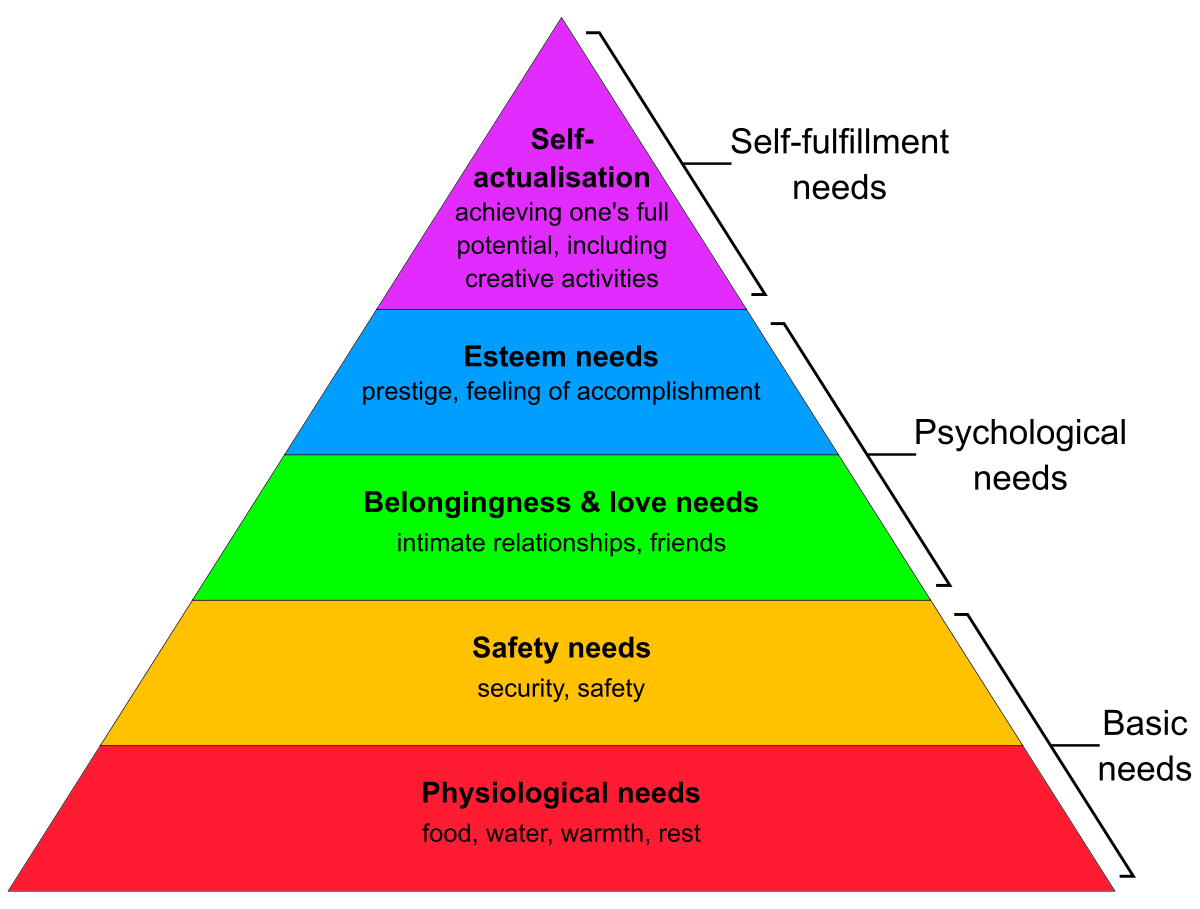
In the Information Age, many of us have our physiological and safety needs taken care of, so we’re concerned with what comes next: psychological and self-fulfillment needs.
The evolution of our internal needs is symbolic of how the world needs us to adapt too. The needs we’re working to fulfill now are a lot less tangible than we were working for earlier. It’s much easier to assess how much food I need to feel full or whether I’m feeling safe compared to understanding how to satisfy my belonging needs and even recognizing my full potential. One could be working at an exceptional company or studying at one of the most prestigious schools and still not feel actualized or proud.
Each one of us is tasked with identifying and articulating the nuances of these needs before we can even begin to meet them.
The Information Age’s distinguishing characteristic is drowning us with information and challenging us to make sense of it for ourselves. Anything you may want is available at the tip of your hands. But does that induce a sense of empowerment or overwhelm in you?
If it is overwhelm that you experience, you are not alone. Our world has expanded exponentially - at a rate much faster than our evolution. Our brains are not built to handle so many distractions and neither are our bodies meant to be caged behind desks.
But, we must rise to the challenge. After all, it is the changes and upgrades we incorporate in our lives today that set the stage for the evolutions to come. The overwhelming nature of the modern world will often tempt us to fall back on strategies of the past. While we can be informed by them, being influenced by them is limiting our true potential because each one of us enjoys a unique context that is developing every day.
The way this realization played out in my life was through the nagging anxiety that I was experiencing. Although anxiety suffers from heavy negative branding, it is actually our bodies warning us that something is not right and needs a closer examination. Most of us experience a healthy level of anxiety which can be incredibly useful if we take heed of it. Perhaps we’ve strayed too far from our values, or maybe life is changing and we’re losing something we value. Or maybe we’ve not resolved two conflicting aspects of our identity.
My anxiety was a signal that I’m at a Defining Point: moving from studying in a developed country with plenty of resources to now wanting to work in an industry notorious for being underresourced in a developing country. What does Aashna’s life look like now that she is no longer a student? What type of professional does she want to be? What does community work look like in the Indian context? And while I kept encountering these questions through work, I had not looked at them in the context of my other pillars.
My first months as a teaching assistant in a public school were tough. The emotional labor of working with children who were fighting poverty, abuse, and lack of support and resources, among other things was overwhelming. I hadn’t prepared for that. And my health suffered. Trying to be a giver in my relationships with the students, made me a taker in my personal relationships and that pillar of my life suffered. I was valuing the template of graduate-then-work (or study more) OVER what I was feeling. This caused immense dissonance and anxiety.
Most of us feel this identity crisis. It’s part of our developmental journey. In fact, there are a variety of conflicts that we must go through as a part of growing up. But are we able to take them head-on? Are we able to rise to the challenge?
Stepping up to the challenge of resolving the nagging anxiety required me to reckon with reality and work with it, instead of dismissing it completely. But taking reality head-on can be scary!
It’s not that I didn’t know that there were important questions about myself and my choices that needed to be addressed. But I was shrouded in fear. This fear we feel acts like a fog that keeps us from seeing the positive and the lesson that every hard situation offers should you choose to go through it.
That’s why it was easier to follow conventional wisdom. But even conventional wisdom could suppress my signaling system for only so long.
I was missing the critical foundation of self-trust. Our trust in ourselves serves as the foundation for the paths we choose and the lives we create. It helps us create lives of meaning and joy for ourselves. It is self-trust that empowers us to take in everything the environment is throwing at us, and be informed by it as we chart our unique journeys through life.
The older I get, the more I realize that no advice, insight, or training is useful without the critical component of self-trust. Any unfamiliar and important challenge will induce fear. It was only the fear of not being able to handle the absolutely foreign situation I had found myself in, that I chose to step away from the challenge. But when I finally resolved the way my identity, circumstance, and opportunity had evolved (and still continue to do so every time I’m in unfamiliar situations), was I able to unlock a whole new level in the game of life. The stronger my self-trust becomes, the more audacious I am with my dreams.
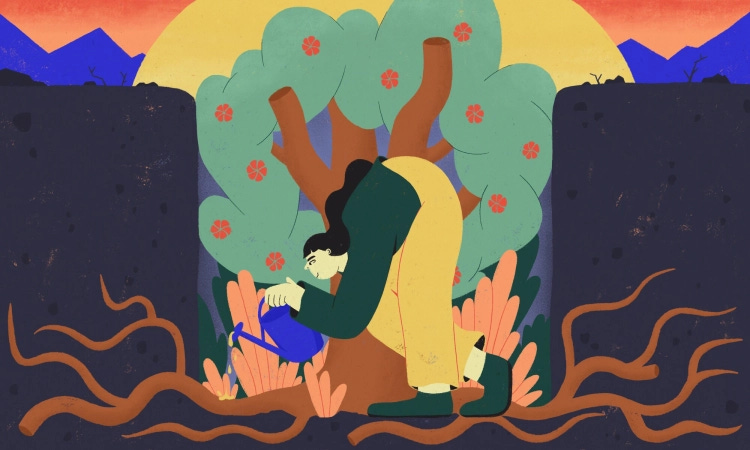
I cannot end this conversation without sharing the framework I use to think through my levels of self-trust. It is the elements of trust broken down by one of my favorite researchers/authors, Brené Brown. She calls it the BRAVING checklist because placing our trust in ourselves or others requires immense vulnerability and courage. I most commonly use it to assess my own levels of self-trust but I also use it to assess my inability to show up the way I want in situations, particularly in relationships.
If the struggle is high, the trust (at least some part of it) is low.
Boundaries: Have you articulated your boundaries of what’s okay, what’s not okay, and why, to yourself? These can vary across time and place, but it’s important you know them so that you can consciously enforce them.
Reliability: Do you do what you say you’ll do and when you say you will? Do you keep your promises to yourself? This is also related to being aware of your limitations so that you don’t overpromise.
Accountability: Do you own your mistakes, apologize and make amends? Yes, to yourself too.
Vault: Do you share information about yourself that you’re not comfortable sharing? In turn, do you share information that‘s not yours to share?
Integrity: Do you practice your values or just profess them? Practicing your values can often look like choosing what’s right (based on your values) over what’s fun, fast, or easy.
Non-judgment: Can you ask yourself what you need, or process what you feel, without judgment? If you’re judgemental towards others, then you’re practicing judgment towards yourself too.
Generosity: Do you make the most generous interpretations of your intentions, words, and actions? Do you start doubting your intentions, words, and actions, based on the outcomes?
Cultivating a more trusting attitude toward the universe has allowed me to be more open to its possibilities. Increasingly, I find myself reading books that are not recommended to me, and listening to podcasts with people I don’t know. These mechanisms of engineered serendipity help me build the muscle of traversing foreign lands and emerging more equipped to create tools, frameworks, etc. for any situation I may find myself in. This is how I’m supporting myself to take on the Information Age.
I believe self-trust helps us find a more enjoyable path to our eventual destinations. Sure, we all want to contribute and make a difference, but don’t we also want to have fun along the way? The past may have an allure because it is known; it is familiar. But the future… that’s where all the excitement really is.
Notes:
Listen to Brené’s podcast episode where she explores the anatomy of trust here.
A report by the Mental Health Foundation on the role and impact of anxiety in our lives.
The anxiety referred to in this conversation does NOT include clinical anxiety. If your anxiety is debilitating and/or affecting your daily functioning, please see a professional.